

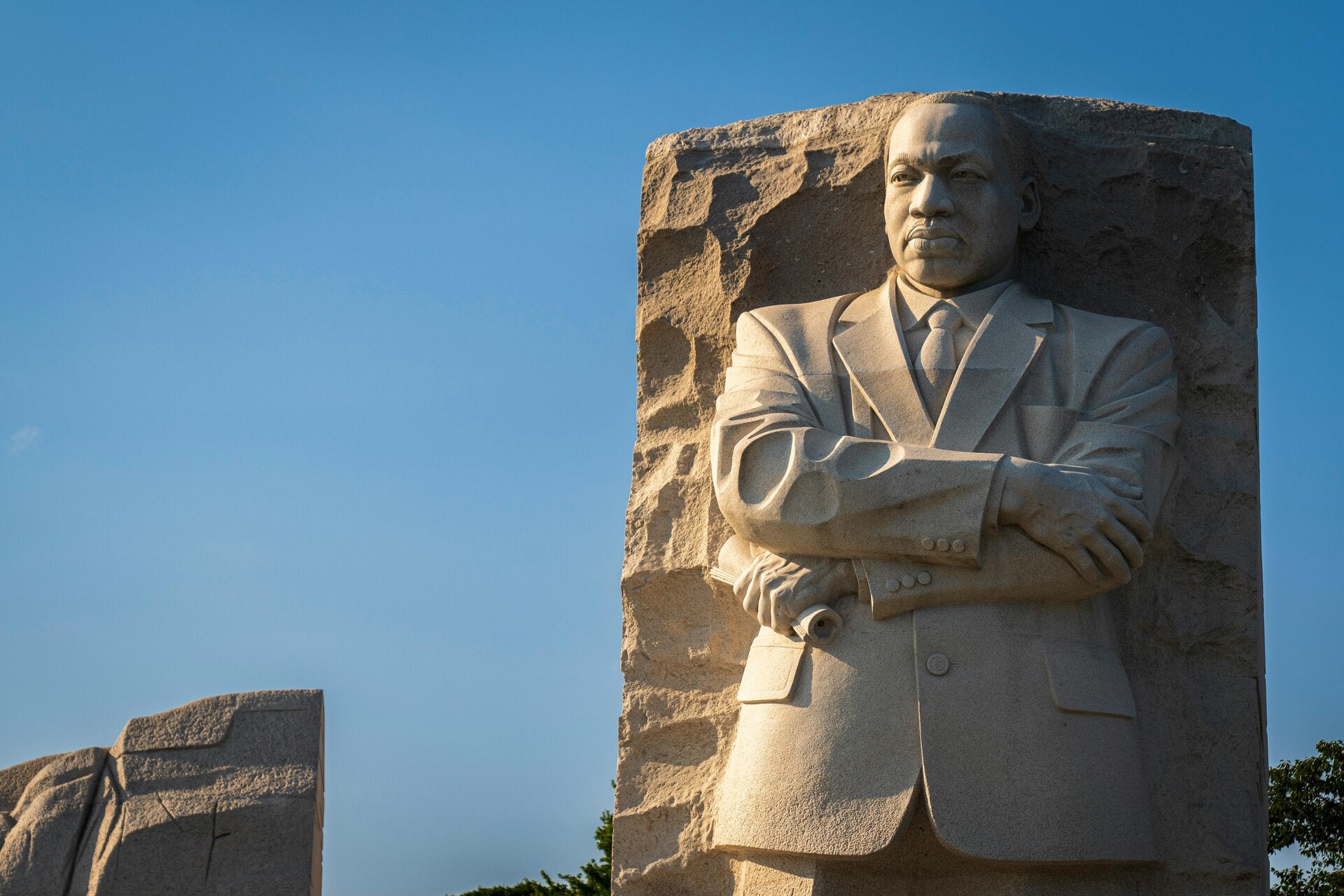
Martin Luther King, Jr. (MLK) Day doesn’t feel like just another date on the calendar to me. Each year, when it arrives, I feel a quiet weight settle in—part reverence, part responsibility. I think about Martin Luther King Jr., not as a distant hero frozen in history books, but as a living challenge to who we are and who we’re becoming as a nation.
At this moment in America, when our conversations are sharper and our divisions feel deeper, Martin Luther King Day asks something uncomfortable of us: not celebration alone, but reflection—and action.
I’ll be honest. It’s easy to quote Dr. King. It’s harder to live what he demanded.
King didn’t call for a feel-good unity that avoids hard truths. He called for justice—real justice—that disrupts comfort. When I read his words today, I don’t hear nostalgia. I hear urgency. He spoke about economic inequality, voter suppression, militarism, and moral courage with a clarity that still cuts through the noise. If anything, his message feels more relevant now than it did when I first learned about him in school.
What strikes me most is how often we sanitize King’s legacy. We like the dream, but we struggle with the discipline it requires. We praise nonviolence, yet we dismiss protest when it inconveniences us. We honor his courage, but shy away from confrontation when injustice shows up in our own communities, workplaces, or families.
MLK Day forces me to ask myself difficult questions:
-
Am I listening to voices that challenge me—or only the ones that comfort me?
-
Do I believe in equality only in theory, or do I support it in policy, practice, and sacrifice?
-
When progress feels slow, do I retreat into cynicism, or do I recommit to hope with action?
Right now, this nation is tired. Many people feel unheard, unseen, or left behind. Trust in institutions is fragile. Empathy feels scarce. And yet, King believed deeply—not naively, but deliberately—in what he called the “beloved community.” Not a perfect society, but one built through persistent love, accountability, and shared responsibility.
That idea matters today because it reminds me that democracy is not passive. Justice does not sustain itself. Equality does not arrive on its own. These are things people choose—again and again—even when it’s hard, even when it’s unpopular.
MLK Day, at its best, is not about looking back and congratulating ourselves for progress made. It’s about looking forward and recognizing the work unfinished. It’s about service, not symbols. Courage, not comfort. Truth, not convenience.
For me, honoring Dr. King means refusing to let his legacy become background noise. It means showing up—with humility, with resolve, and with the understanding that real change often starts small: in how we listen, how we vote, how we speak up, and how we treat one another when no one is watching.
This day reminds me that hope is not passive optimism. It’s a discipline. And in this moment—when America feels fractured and uncertain—that disciplined hope may be the most patriotic act we have.